 Albert Einstein was born on March 14,1879, in Ulm, Germany. In his early years in education, he was a poor student, and many teachers thought he was retarded. He had many speech problems when he was nine years old. But many teachers didn't know that Albert was fascinated by the wondrous and confusing world around him. However, like many kids, he disliked school and ended his secondary education at age sixteen. He had gotten himself expelled by his bad attitude, and found a way to quit school without hurting his chances for university. He mastered many things, including calculus, the measurement of irregular shapes, and the form of math used to solve problems involving physics and engineering. However, Einstein quickly became infamous by his mathematical expression e=mc 2 because it was used to set off a bomb that destroyed Hiroshima, Japan. Albert Einstein died in Princeton,1955.
Wednesday, October 28, 2015
Einstein
Albert Einstein was born on March 14,1879, in Ulm, Germany. In his early years in education, he was a poor student, and many teachers thought he was retarded. He had many speech problems when he was nine years old. But many teachers didn't know that Albert was fascinated by the wondrous and confusing world around him. However, like many kids, he disliked school and ended his secondary education at age sixteen. He had gotten himself expelled by his bad attitude, and found a way to quit school without hurting his chances for university. He mastered many things, including calculus, the measurement of irregular shapes, and the form of math used to solve problems involving physics and engineering. However, Einstein quickly became infamous by his mathematical expression e=mc 2 because it was used to set off a bomb that destroyed Hiroshima, Japan. Albert Einstein died in Princeton,1955.
Tuesday, October 27, 2015
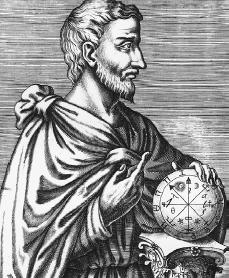
Pythagoras
Monday, October 26, 2015
Cheryl Elisabeth Praeger
Cheyl Elisabeth Praeger was born on September 7, 1948 in Toowoomba, Queensland, Australia. She hasn't died yet which would make her 67.
Praeger's parents were named Eric and Queenie. They both had to leave school to earn their living. They didn't have a chance on participating in a higher education.
After leaving her school she enrolled in the Universety of Queensland, and got her B.Sc degree in 1969. 2
Praeger studied the functional equation x (n+1)- x (n)= x (n) + x(x(n) and x is an integer valued function of the integer variable, n, and found three parameter family of solutions.
My sources are here and here and here
Monday, October 19, 2015
Thursday, February 19, 2015
Archimedes
Archimedes

Sources:
http://fabpedigree.com/james/mathmen.htm
http://www-groups.dcs.st-and.ac.uk/~history/BiogIndex.html
http://www.math.com/students/mathematicians.html
Sunday, January 25, 2015
Math handwriting recognition software- Impressive
Khan academy has made a new handwriting recognition software that can read and understand handwriting using programming. The software was released as a mobile app. The new version adds more personalized lesson plans, including 150,000 lessons that are aligned to the national Common Core educational standards. It can automatically identify long equations (and is even able to manipulate and erase them easily), which was designed in partnership with handwriting recognition company, MyScript. It is also possible to put math equations into a computer. Academic papers are submitted in electronic form, though mostly for publishing.
As of now, the equations are mostly for early high school. But it’s easy to see how they extend to all sorts of advanced math in the near future.
Sources:
http://venturebeat.com/2015/01/20/khan-academys-new-math-handwriting-recognition-software-is-impressive-video/Wednesday, January 21, 2015
Plato
Plato was a Greek mathematician and philosopher born in Athens somewhere in between 429 and 423 BC. He was also one of ancient Greece’s most important patrons of mathematics. Inspired by Pythagoras, he founded his Academy in Athens in 387 BC, where he stressed mathematics as a way of understanding more about reality. In his academy, some of the questions he asked his students were
 the Three Classical Problems(“squaring the circle”, “doubling the cube” and “trisecting the angle”) and to some extent these problems have become identified with Plato, although he was not the first to pose them.

He was best known for his identification of 5 regular symmetrical 3-dimensional shapes. The 5 3-dimensional shapes were called the Platonic Solids which contained the tetrahedron (constructed of 4 regular triangles), the octahedron (composed of 8 triangles), the icosahedron (composed of 20 triangles), the cube (composed of 6 squares), and the dodecahedron (made up of 12 pentagons) .
Plato was a very successful mathematician and philosopher. He was also a pioneer of education in mathematics.
Sources:
www.storyofmathematics.com/greek_plato.html
www.famous-mathematicians.com/plato/
planetmath.org/platosmathematics
Subscribe to:
Posts (Atom)