If you would like to see my math cartoon on GCF/GCD click here
My source was here
Tuesday, October 25, 2016

Sunday, October 23, 2016
Tuesday, October 11, 2016
Monday, October 10, 2016
What I Learned About In Earlier Posts
I loved this post. This post was about Albert Einstein and how he was in the past. When he was young through when he died. He grew up not being very appreciated by his teachers because of his bad attitude and not doing good on his work. He got expelled and at age 16 quit school. Although he wasn’t very bright in the past (Which I had never known) he came up with the now famous equation E=mc2. The reason why it is so famous is because it was used to set off a bomb that destroyed Hiroshima, Japan. I learned a lot from this post. I have always wanted to learn about E=mc2. Being more specific I want to know how it set off the bomb, and why was Einstein interested in that equation?
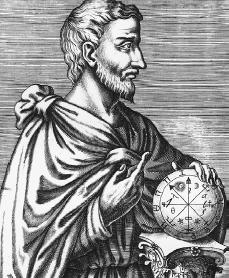
I thought this post was VERY interesting and I never would have thought to write about who made the expression. Pythagoras was the person who apparently thought of that two expressions equal an answer which was super surprising!. I learned that he was a renowned Greek mathematician. He had also thought of the Pythagorean Theorem. Something that I would definitely like to know is: How did he think of the expression?
Monday, January 25, 2016
Leonardo Pisano Bigollo
Leonardo was born 1170 in Italy thought to be born in the city of Pisa. He had died in 1250, which would make him about 80 years old when he passed. Leonardo was Italian, and known for the Fibonacci numbers. The Fibonacci numbers are a series of numbers in which each each number is the sum of the two preceding numbers. How he got the name Fibonacci is because his nick name was of course Fibonacci.
During the 12th century Leonardo under took travels on the Mediterranean. Leonardo gathered most of his education in the North Africa where his father, Guglielmo, held a diplomatic post.
Since Bigollo lived before there was printing, his books were hand written, so the only way you could have a personal copy of it, you would have to have another copy hand written copy made for you.
A third degree equation x^3+ 2x^2+ 10x= 20 which Leonardo solved by a trial and error method known as approximation; his answer was: 1^022^i7^7t 42^III 33^IV 4^V 40^VI(1+22/60+7/3,600+42/216,000 . . .)
You would also know him for the Fibiaoncci numbers, which are a series of numbers in which each number is the sum of the two preceding numbers.
These are my sources:
http://www.britannica.com/biography/Leonardo-Pisano
http://www-groups.dcs.st-and.ac.uk/~history/Biographies/Fibonacci.html
http://famous-mathematicians.org/leonardo-pisano-bigollo/
Friday, January 15, 2016
Tuesday, December 8, 2015
Everyday Math
Everybody uses math in everyday life whether you know it or not. Do you have a smartphone? What about an tablet or other device? To be able to know how many coins you earn or how much of a higher (or lower) score you have than everyone else or yourself. That is math. Maybe you don't do trigonometry problems on a daily basis but common math is all around us.
If you like to cook or bake, to make enough servings for a group of people takes multiplication and/or addition.
Organizing may be your thing and you probably measure things to make sure they fit into a certain amount of space. A desk may only have 9 inches of space to fit your items in. 3 textbooks that are 2 inches wide each, will only give you 3 inches for your notebooks or other supplies.
You may tell your mom that you are almost out of milk and need her to get more at the store. Maybe you round the amount of milk to about ¼ of a carton left. You are using math.
Even something a simple a planning a sleepover with a few friends uses math. How many people will be there? What time do we need to be there? What time will we go home the next morning? How many hours do we have to hangout? See even the simplest things involve math in some ways.
Sources:http://www.mathworksheetscenter.com/mathtips/everydaymath.html
http://www.learner.org/interactives/dailymath/
http://everydaylife.globalpost.com/use-mathematics-everyday-life-14225.html
John Von Neumann
In 1903, Budapest had a new member of the population. John von Neumann was an inventor and mathematician who was born into a hungarian family. Max and Margaret von Neumann were his parents. John Von Neumann was the oldest of 3 children in the Von Neumann family.
John Von Neumann was known for his amazing creativity and mathematics. He went into a career as a professional mathematician. Part of his job was to create papers that reviewed his own theories about mathematics. After he wrote and released them, Von Neumann would show other mathematicians his work.
In his later life he got awarded the Bócher Memorial Prize and the Enrico Fermi Award. He was diagnosed with bone cancer and 18 months later he, sadly, passed away. Although he isn’t alive today, his legacy lives on.
Thursday, November 19, 2015
Wednesday, October 28, 2015
Einstein
 Albert Einstein was born on March 14,1879, in Ulm, Germany. In his early years in education, he was a poor student, and many teachers thought he was retarded. He had many speech problems when he was nine years old. But many teachers didn't know that Albert was fascinated by the wondrous and confusing world around him. However, like many kids, he disliked school and ended his secondary education at age sixteen. He had gotten himself expelled by his bad attitude, and found a way to quit school without hurting his chances for university. He mastered many things, including calculus, the measurement of irregular shapes, and the form of math used to solve problems involving physics and engineering. However, Einstein quickly became infamous by his mathematical expression e=mc 2 because it was used to set off a bomb that destroyed Hiroshima, Japan. Albert Einstein died in Princeton,1955.
Tuesday, October 27, 2015
Pythagoras
Monday, October 26, 2015
Cheryl Elisabeth Praeger
Cheyl Elisabeth Praeger was born on September 7, 1948 in Toowoomba, Queensland, Australia. She hasn't died yet which would make her 67.
Praeger's parents were named Eric and Queenie. They both had to leave school to earn their living. They didn't have a chance on participating in a higher education.
After leaving her school she enrolled in the Universety of Queensland, and got her B.Sc degree in 1969. 2
Praeger studied the functional equation x (n+1)- x (n)= x (n) + x(x(n) and x is an integer valued function of the integer variable, n, and found three parameter family of solutions.
My sources are here and here and here
Monday, October 19, 2015
Thursday, February 19, 2015
Archimedes
Archimedes

Sources:
http://fabpedigree.com/james/mathmen.htm
http://www-groups.dcs.st-and.ac.uk/~history/BiogIndex.html
http://www.math.com/students/mathematicians.html
Sunday, January 25, 2015
Math handwriting recognition software- Impressive
Khan academy has made a new handwriting recognition software that can read and understand handwriting using programming. The software was released as a mobile app. The new version adds more personalized lesson plans, including 150,000 lessons that are aligned to the national Common Core educational standards. It can automatically identify long equations (and is even able to manipulate and erase them easily), which was designed in partnership with handwriting recognition company, MyScript. It is also possible to put math equations into a computer. Academic papers are submitted in electronic form, though mostly for publishing.
As of now, the equations are mostly for early high school. But it’s easy to see how they extend to all sorts of advanced math in the near future.
Sources:
http://venturebeat.com/2015/01/20/khan-academys-new-math-handwriting-recognition-software-is-impressive-video/Wednesday, January 21, 2015
Plato
Plato was a Greek mathematician and philosopher born in Athens somewhere in between 429 and 423 BC. He was also one of ancient Greece’s most important patrons of mathematics. Inspired by Pythagoras, he founded his Academy in Athens in 387 BC, where he stressed mathematics as a way of understanding more about reality. In his academy, some of the questions he asked his students were
 the Three Classical Problems(“squaring the circle”, “doubling the cube” and “trisecting the angle”) and to some extent these problems have become identified with Plato, although he was not the first to pose them.

He was best known for his identification of 5 regular symmetrical 3-dimensional shapes. The 5 3-dimensional shapes were called the Platonic Solids which contained the tetrahedron (constructed of 4 regular triangles), the octahedron (composed of 8 triangles), the icosahedron (composed of 20 triangles), the cube (composed of 6 squares), and the dodecahedron (made up of 12 pentagons) .
Plato was a very successful mathematician and philosopher. He was also a pioneer of education in mathematics.
Sources:
www.storyofmathematics.com/greek_plato.html
www.famous-mathematicians.com/plato/
planetmath.org/platosmathematics
Wednesday, December 10, 2014
Adding Mixed Numbers Lesson App!
Ghostie's Back in the new math app!
If you need help with adding mixed numbers, Ghostie has a very convenient Lesson for you

This is him in his natural environment. Teaching math and floating around. And he doesn't even just talk. Most of the time he summons the magical black numbers to show examples for whatever the lesson is. this one happens to be adding mixed numbers! so if you need help adding mixed numbers, click the link above.
Saturday, November 29, 2014
Leonhard Euler
Leonhard Euler

Leonhard Euler lived through 1707-1783 and was born on April 15, 1707 and was educated in Basel, Switzerland. He had married twice and had 13 children but only 5 lived, the rest died at a young age. He was arguably the greatest mathematician of the 18 century. Euler had made the Euler theorem or the Euler formula but, those can mean many things because he made so many important contributions. One of them was that any polyhedron that doesn't intersect itself the number of faces plus the number of vertices minus the number of edges Will always equal 2. June ofHe spent most of his career in St. Petersburg and Berlin. In 1727 he joined the St. Petersburg academy of science.
Euler was a great mathematician and scientist. He could recite word-for-word the entire Aeneid, which is a twelve book series of poems with about 300 words on each page. Leonhard was very good with dealing with distractions. He did lots of his work while his children were playing at his feet.
I'm sure Leonhard was a great person, but what I know is... he changed the world.
SOURCES: www.usna.edu/Users/math/meh/euler.html
Www.Mathsisfun.com
Www-history.mcs.st-and.ac.uk
Sunday, November 16, 2014
Euclid of Megara and Alexandria
Euclid of Megara and Alexandria
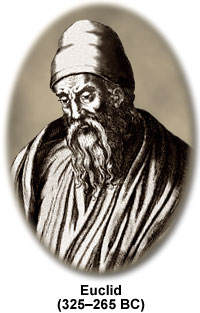
It is widely believed that Euclid studied under Aristotle. He later founded the school of mathematics at the university of Alexandria. He was also first to discover that there are probably an infinite amount of prime numbers and he created Euclid's algorithm for computing Greatest Common Divisor. He introduced the Mersenne primes and observed that (M2+M)/2 is always perfect
"The laws of nature are but the mathematical thoughts of God,"- EuclidHis famous writings consist of many important theorems, most were inspired by the people before him like Hippocrates or Exodus. Some of his books include: The Division of the scale, The Optics and The Elements. Sadly most of his masterpieces were lost in history or ruined but The Elements was used as a textbook for almost 2000 years and is still the basis of almost all high school geometry today.
Sources
30 Greatest
Brittanica
Euclid quotes
Tuesday, November 4, 2014
My Math App (Programmed in Scratch)
There's this awesome programming language called scratch that you can look at Here.
But it's not the programming language that's the cool thing here, it's what can be made.
I made a math app (Here).
 It uses actual
buttons with A, B, C, and D on them. The Ghost, (Mild mannered spooky math instructor Ghostie) Goes through Topic 2 of sixth grade Envision math, which covers basic algebra. Ghostie says the questions while you click on A, B, C, or D (which says what the choice is) If you click the right one, you will move on to the next topic. If you are incorrect, Ghostie will tell you the correct Answer and tell you why that is the correct answer.

buttons with A, B, C, and D on them. The Ghost, (Mild mannered spooky math instructor Ghostie) Goes through Topic 2 of sixth grade Envision math, which covers basic algebra. Ghostie says the questions while you click on A, B, C, or D (which says what the choice is) If you click the right one, you will move on to the next topic. If you are incorrect, Ghostie will tell you the correct Answer and tell you why that is the correct answer.
Subscribe to:
Posts (Atom)